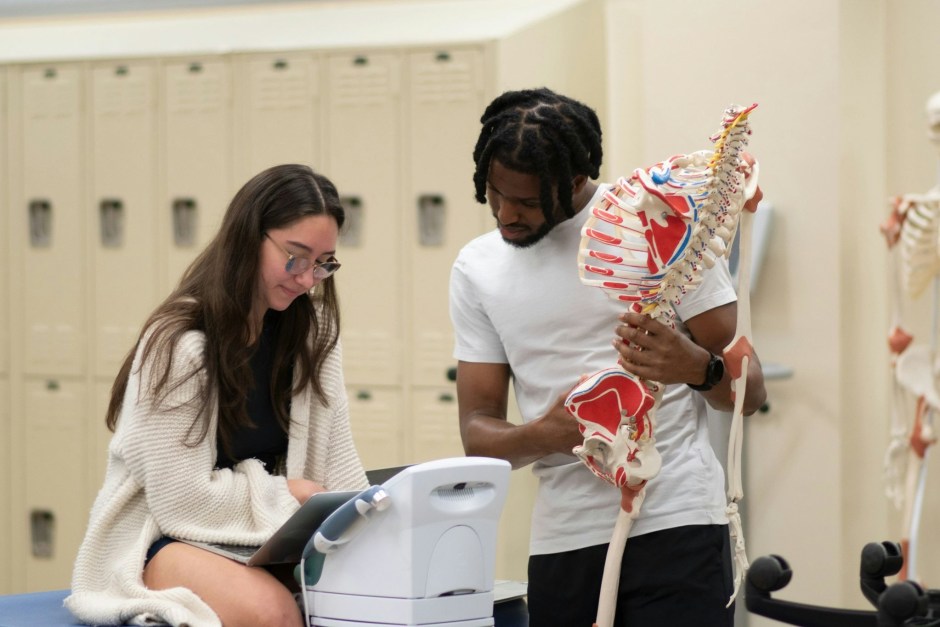
Anatomy can feel like a huge map with too many roads, rivers, and hidden ways. One minute you’re learning the bones of the skull, and the next minute you’re trying to remember the branches of the brachial plexus. Exam reviews in anatomy are stressful for many students because the subject is full of names, locations, functions, and relationships. But the good news is simple: you don’t have to memorise everything in a panic. You need a smart system for review.
When students are studying anatomy for exams, it should not be a matter of reading the textbook from page one to the end. That’s like trying to drink from a waterfall. The best way to learn anatomy is through active, visual, and repeated learning methods. With the right strategy, anatomy becomes less scary and much easier to learn.
1. Start With a Clear Anatomy Revision Plan
Prepare before opening your notes. Many students do not manage their time efficiently. They study whatever they find difficult. This can cause confusion and uneven preparation. A simple revision timetable can help you stay on track.
First, list the major anatomy topics on your exam. For example, you may want to revise the upper limb, lower limb, thorax, abdomen, head and neck, or neuroanatomy. Then you can spread these topics over the days you have. Spend more time on the difficult areas, but don’t neglect the easier ones altogether.
A good study plan for anatomy includes a series of short, focused study sessions. Instead of studying for five hours without any direction, try studying for 45–60 minutes with a clear goal in mind. For example, you can review the muscles of the anterior thigh and test their origin, insertion, nerve supply, and action.
Also, schedule time for revision, not just learning. Anatomy is a heavy memorisation subject, so one review is not enough. You have to go back to the same subject many times. Think of your brain as a trail through grass. The more you walk the path, the clearer it becomes.
Some students also have written coursework linked to anatomy, especially in nursing and health science programs. These tasks may include case discussions, care plans, or short clinical explanations. They can be challenging when exam revision, lab practice, and deadlines happen at the same time. In that situation, students may turn to nursing assignment help as part of managing nursing coursework while keeping their anatomy revision focused. This connection fits the topic because written tasks often require clear anatomy knowledge. For example, a care-related question may ask why nerve damage affects movement or sensation. To handle these topics well, students still need to understand the structures, not only remember their names. Strong revision makes written work easier to follow. It also helps students explain clinical points in a more accurate and confident way.
2. Use Active Recall Instead of Passive Reading
One of the biggest mistakes students make is rereading notes over and over again without testing themselves. Reading is comfortable, but it can lead to an unwarranted sense of confidence. You may know the information on the page, but can you recall it?
Active recall is one of the best ways students can review anatomy before exams. It means making your brain recall information from memory. It’s harder than reading, but it’s much more effective.
Active recall is very easy to apply in many ways. Close your book and name the branches of an artery. Look at a blank diagram and label the parts. Cover the answers in your notes and explain the topic out loud. Ask yourself questions like, “What nerve innervates this muscle?” or “What passes through this foramen?”
Flashcards are also a good option, especially for facts like muscle actions, nerve roots, bone landmarks, and blood supply. However, don’t make your flashcards too long. A good flashcard should test one clear idea. One side might say, “Median nerve roots,” and the other side might say, “C5 to T1.”
The trick is to test yourself before you feel ready. The learning happens in that little struggle.
3. Learn Anatomy Visually and Spatially
Anatomy is not just a list of words. It is a three-dimensional subject. Organs, muscles, nerves, and vessels all have their places and relationships. If you only know the text by heart, you may struggle with practical exams or diagram questions.
Whenever possible, make use of pictures, diagrams, atlases, videos, and models. When you look at a structure, ask yourself where it is, what is around it, what goes over it, and what goes under it. These relationships are frequently tested in exams.
For example, don’t just learn the femoral artery. Know where it is in the femoral triangle, what structures are medial or lateral to it, and why this is clinically important. This kind of thinking helps you connect facts rather than store them as separate pieces.
Draw Simple Diagrams From Memory
Drawing anatomy doesn’t mean you have to be an artist. Sketches can be powerful, even simple ones. Draw the branches of the external carotid artery. Draw the Circle of Willis. Draw the heart chambers. Draw the brachial plexus. Then compare your drawing to the correct one.
Drawing works because it makes your brain organise information. It also reveals what you truly know versus what you believe you know. Even crude diagrams can help memory and understanding.
Use Models, Apps, or 3D Resources
If you have anatomical models, use them often. Hold the model, turn it over, and identify structures from different angles. If you have a 3D anatomy app, rotate the body part and hide the labels before testing yourself.
This is particularly useful for topics like skull foramina, cranial nerves, pelvic anatomy, and joints. It is hard to get a sense of these areas from flat images alone. Seeing anatomy in 3D is like turning on the lights in a dark room.
4. Practice With Past Questions and Clinical Scenarios
Practice questions should always be included in exam preparation. Past papers, quizzes, and lab-style questions help you understand how your knowledge will be tested. Anatomy tests generally include simple questions, but they can also include clinical cases.
For example, rather than asking, “What nerve innervates the deltoid muscle?” The question could present a patient who is unable to abduct the arm after a shoulder injury. You need to relate the symptom to the axillary nerve. That’s why clinical anatomy is so important.
When learning anatomy for exams, make links to real-life examples. Ask yourself this: What if this nerve is damaged? What happens if this artery gets blocked? If this muscle is weak, what movement is lost?
Clinical relevance makes anatomy easier to remember. It tells a factual story. And stories are easier to remember than individual facts.
Practice questions will also show you your weak areas. It’s okay if you get the answers wrong. Mistakes are signposts. They point out the next place to go. After each question, read why the answer is correct and why the other options are wrong.
5. Review in Layers and Take Care of Your Brain
The most effective way to review anatomy is in layers. First, get the big picture. Then add in the details. Take the upper limb, for example. Start with the bigger bones and compartments. Then review the muscles, nerves, blood vessels, and clinical injuries. This prevents you from getting lost in tiny details too soon.
Spaced repetition is another useful technique. Review a subject today, then tomorrow, then after a few days. This helps transfer information from short-term memory to long-term memory. Cramming might get you through one night, but spaced review will allow you to remember more clearly on exam day.
Group study can also be helpful, but only if it remains on track. Try teaching one another. One student can explain the shoulder joint while another asks questions. Teaching has power. It shows the holes in your understanding. If you can’t explain something simply, you probably need to look at it again.
Don’t forget your body while studying. Sleep, food, water, and short breaks all count. When brains are tired, they don’t remember details well. Learning anatomy without breaks is like trying to charge your phone with a broken charger. You can spend hours at your desk, but not much of that energy is transferred to your memory.
Don’t try to learn lots of new things just before the exam. Instead, focus on high-yield revision. Review images, important tables, common clinical injuries, and difficult structures. Keep your last review active and peaceful.
Conclusion
It doesn’t have to feel impossible to review anatomy before exams. The secret is to study actively, visually, and repeatedly. Have a clear plan. Test yourself often. Draw diagrams. Use models. Do clinical questions. Go back to hard topics more than once. Anatomy is easier if you stop thinking of it as a mountain of random facts and start thinking of it as a connected map of the human body.
Remember, all students have trouble with anatomy sometimes. It’s not just talent that sets you apart. It’s a strategy. By revising consistently and using smart revision methods, you can go into your anatomy exam with more confidence and a much clearer mind.
Disclaimer:
This article is for educational and informational purposes only. It is not intended to provide medical advice, diagnosis, or treatment. The content reflects general concepts in anatomy and may not apply to every clinical situation. Always consult a qualified healthcare professional, licensed medical specialist, or academic instructor for medical decisions, patient care, or course-specific guidance. Never rely solely on this material when making clinical judgments.

Stay updated, free articles. Join our Telegram channel

Full access? Get Clinical Tree


